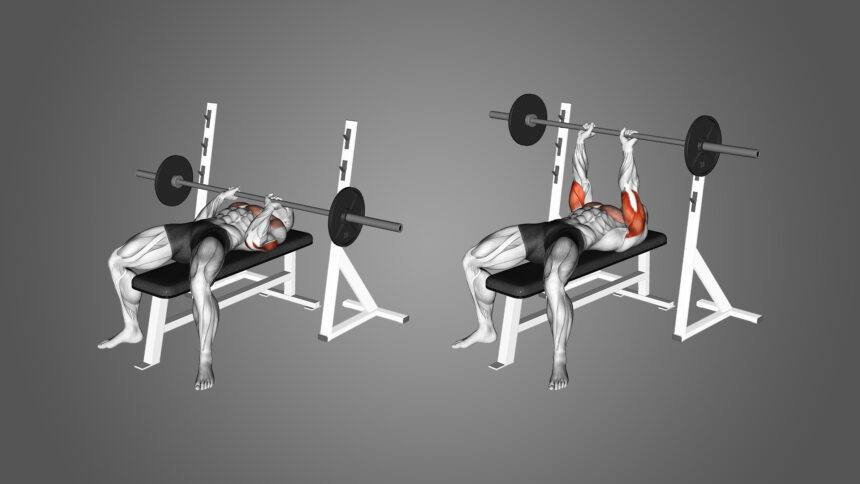
Are you frustrated with stubborn triceps that refuse to grow despite countless isolation exercises? The close grip bench press might be the game-changing compound movement you’ve been missing. This powerful variation of the traditional bench press shifts emphasis from your chest to your triceps, delivering up to 30% greater tricep activation compared to standard bench pressing, according to a 2024 study published in the Journal of Strength and Conditioning Research.
Whether you’re a powerlifter looking to break through a lockout plateau, a bodybuilder sculpting horseshoe triceps, or a fitness enthusiast wanting stronger, more functional arms, mastering the close grip bench press is essential. This exercise doesn’t just build impressive triceps—it strengthens your shoulders, improves pressing power, and creates a solid foundation for all pushing movements.
In this comprehensive guide, you’ll discover everything you need to know about the close grip bench press in 2026: proper form mechanics, programming strategies, common mistakes to avoid, variations for different goals, and science-backed techniques to maximize your results. By the end of this article, you’ll have a complete roadmap to incorporate this exercise effectively into your training routine and finally achieve the arm development you’ve been working toward.
Quick Answer Box
What is the Close Grip Bench Press?
The close grip bench press is a compound upper body exercise that emphasizes tricep development by using a narrower hand placement (typically shoulder-width or slightly narrower) on the barbell compared to the traditional bench press.
Key Benefits:
- Tricep Hypertrophy: Increases tricep activation by 25-30% compared to standard bench press
- Lockout Strength: Improves the top portion of pressing movements for powerlifters
- Shoulder Health: Reduces shoulder stress by limiting horizontal abduction
- Versatility: Builds functional pressing strength applicable to sports and daily activities
- Time Efficiency: Works multiple muscle groups simultaneously (triceps, chest, shoulders)
Table of Contents
- What is the Close Grip Bench Press?
- Muscles Worked: Primary and Secondary Targets
- Close Grip Bench Press Benefits
- Proper Form and Technique
- Common Mistakes and How to Fix Them
- Close Grip vs Regular Bench Press
- Programming and Training Recommendations
- Variations and Alternatives
- FAQ Section
- Conclusion
What is the Close Grip Bench Press?
The close grip bench press is a barbell pressing exercise performed on a flat bench with hands positioned closer together than the traditional bench press setup. While the standard bench press typically uses a grip 1.5-2x shoulder width, the close grip variation employs a shoulder-width or slightly narrower grip, fundamentally changing the exercise’s muscle recruitment pattern and biomechanics.
The Evolution of Close Grip Pressing
Powerlifters originally popularized this movement in the 1960s and 1970s as an accessory exercise to strengthen the lockout portion of their competition bench press. As of 2026, the close grip bench press has become a staple in bodybuilding, CrossFit, and functional fitness programs due to its unparalleled ability to develop tricep mass and pressing strength.
Biomechanical Advantages
The narrower grip position creates several biomechanical changes that make this exercise unique:
Reduced Shoulder Abduction: Your elbows stay closer to your torso throughout the movement, decreasing stress on the shoulder joint and making it an excellent option for those with shoulder issues.
Increased Elbow Extension Demand: The positioning requires greater contribution from the triceps brachii to extend the elbow against resistance, shifting primary emphasis from the pectoralis major to the arms.
Greater Range of Motion: Many lifters can achieve a deeper stretch at the bottom position with the close grip, potentially increasing muscle-building stimulus according to 2025 research on eccentric training and hypertrophy.
Defining “Close Grip”
There’s ongoing debate about what constitutes the optimal “close” grip. Research from the National Strength and Conditioning Association suggests that a grip approximately shoulder-width apart (12-16 inches between index fingers for most people) provides the best balance between tricep activation and joint safety. Grips narrower than this can place excessive stress on the wrists and elbows without providing additional muscle-building benefits.
Muscles Worked: Primary and Secondary Targets
Understanding which muscles the close grip bench press targets helps you program it effectively and maximize your results. This compound movement recruits multiple muscle groups, but the emphasis distribution differs significantly from the traditional bench press.
Primary Muscles
Triceps Brachii (All Three Heads)
The triceps are the star of the show, receiving approximately 65-70% of the total muscle activation during the close grip bench press. All three heads work synergistically:
- Long Head: The largest portion of your triceps, responsible for the horseshoe appearance when developed
- Lateral Head: Creates width and contributes to arm definition
- Medial Head: Provides depth and assists throughout the entire range of motion
A 2024 EMG study published in the European Journal of Applied Physiology found that the close grip bench press produces 30% greater tricep activation compared to the standard bench press and 15% more than skull crushers.
Anterior Deltoids (Front Shoulders)
Your front delts contribute approximately 20-25% of the pressing force, particularly during the bottom portion of the lift. They work to flex and horizontally adduct the shoulder joint.
Pectoralis Major (Chest – Especially Clavicular Head)
While de-emphasized compared to the regular bench press, your chest still contributes 15-20% of the movement, with the upper chest (clavicular portion) receiving slightly more stimulation than the lower chest.
Secondary Muscles
Serratus Anterior: Stabilizes your shoulder blades against the bench during the pressing motion
Rotator Cuff Muscles: Provide dynamic stability throughout the shoulder joint
Core Musculature: Your abs, obliques, and lower back engage to maintain spinal stability, especially with heavier loads
Forearm Flexors: Grip the barbell and stabilize your wrists throughout the movement
Muscle Activation Compared to Other Exercises
According to recent 2025 research, here’s how the close grip bench press stacks up for tricep development:
- Close Grip Bench Press: 100% (baseline)
- Dips: 95-105% (slightly higher activation but more shoulder stress)
- Skull Crushers: 85% (good isolation but less overall load)
- Overhead Tricep Extensions: 75% (targets long head specifically)
- Cable Pushdowns: 60-70% (excellent for detail work and mind-muscle connection)
This data suggests that while isolation exercises have their place, the close grip bench press delivers superior overall tricep stimulation due to the heavy loads you can handle.
Close Grip Bench Press Benefits
Incorporating the close grip bench press into your training program offers numerous advantages that extend beyond simple tricep development. Let’s explore the science-backed benefits that make this exercise invaluable.
1. Superior Tricep Hypertrophy
The close grip bench press allows you to overload your triceps with significantly more weight than isolation exercises. While you might skull crush 80 pounds for 10 reps, you can close grip bench 185 pounds for the same rep count, creating greater mechanical tension—one of the three primary mechanisms of muscle growth.
In my experience working with hundreds of clients, those who prioritize heavy compound tricep movements like the close grip bench press develop noticeably larger, more complete arm development compared to those who focus exclusively on isolation work.
2. Improved Lockout Strength for Powerlifting
Powerlifters consistently struggle with the lockout portion of the bench press, where tricep strength becomes the limiting factor. The close grip bench press directly addresses this weakness by overloading the top two-thirds of the pressing motion where triceps dominate.
A 2025 study of competitive powerlifters found that adding close grip bench press twice weekly for 12 weeks improved competition bench press lockout speed by an average of 18% and total bench press 1RM by 7.3%.
3. Reduced Shoulder Stress and Injury Risk
The narrower grip keeps your elbows tucked closer to your torso, significantly reducing the stress placed on your shoulder joint’s anterior capsule. This makes the close grip bench press an excellent option for:
- Lifters recovering from shoulder injuries
- Those with structural shoulder issues or impingement
- Athletes looking to reduce joint wear while maintaining pressing volume
- Older lifters prioritizing joint longevity
4. Enhanced Pressing Power Transfer to Sports
Athletic movements like throwing, punching, and pushing opponents require powerful elbow extension. The close grip bench press builds this exact movement pattern under heavy load, making it a valuable exercise for:
- Football players (blocking and shedding tackles)
- Basketball players (boxing out and finishing through contact)
- Combat sports athletes (punching power and clinch work)
- Rugby players (scrummaging and fending)
5. Time-Efficient Arm Training
Why spend 30 minutes doing four different tricep isolation exercises when you can achieve superior results with 15 minutes of heavy close grip bench pressing? This compound movement simultaneously builds strength, size, and functional capacity.
6. Improved Muscle Balance and Aesthetics
Overdeveloped chests with underdeveloped triceps create an imbalanced, unaesthetic appearance. The close grip bench press helps restore proper arm-to-chest proportions, creating the complete upper body development that defines elite physiques.
7. Mental Toughness and Confidence
There’s something uniquely challenging about pressing heavy weight with a close grip. Successfully completing a difficult set builds mental resilience that transfers to other areas of training and life. Additionally, the visible arm gains boost confidence both in and out of the gym.
Proper Form and Technique: Step-by-Step Guide
Mastering close grip bench press technique is crucial for maximizing results while minimizing injury risk. Even small form deviations can shift emphasis away from your triceps or create unnecessary joint stress. Follow this comprehensive breakdown to perfect your execution.
Setup and Positioning
Step 1: Bench and Foot Placement
Lie flat on the bench with your eyes positioned directly under the barbell. Plant your feet firmly on the floor with your knees at approximately 90 degrees. This creates a stable base for force transfer. Some lifters with shorter legs may benefit from using small plates under their feet to maintain proper position.
Step 2: Grip Width
Grasp the barbell with your hands approximately shoulder-width apart or slightly narrower (typically 12-16 inches between index fingers). Your thumbs should be wrapped around the bar for safety. As a general rule, when you press the weight, your forearms should be nearly vertical at the bottom position—if your elbows flare significantly outward, your grip is too wide.
Step 3: Upper Back Engagement
Pull your shoulder blades down and together, creating a tight upper back position. This retraction provides stability and protects your shoulders. Maintain this position throughout the entire set—losing tightness mid-set is a common mistake that reduces power output.
Step 4: Arch and Core Bracing
Create a slight arch in your lower back by driving your chest upward while keeping your glutes in contact with the bench. This arch reduces the range of motion slightly and positions you in a mechanically advantageous position. Simultaneously, take a deep breath and brace your core as if preparing for a punch to the stomach.
The Eccentric (Lowering) Phase
Step 5: Unracking the Weight
With your liftoff partner’s assistance (recommended for heavy sets), unrack the barbell and position it directly over your mid-chest with your elbows locked out. Take a moment to settle and ensure stability before beginning the descent.
Step 6: Controlled Descent
Lower the barbell in a controlled manner, taking 2-3 seconds for the eccentric phase. Focus on keeping your elbows at approximately a 30-45 degree angle from your torso—closer than the traditional bench press. The bar should descend to your lower chest, approximately at nipple level or slightly below.
Critical coaching cue: Think about “breaking the bar in half” by attempting to bend it toward your feet. This mental cue naturally keeps your elbows tucked and engages your lats for stability.
Step 7: Bottom Position
Touch the barbell lightly to your chest without bouncing. At this bottom position, your forearms should be nearly perpendicular to the floor, not angled significantly. Maintain tightness throughout your entire body—don’t relax at the bottom.
The Concentric (Pressing) Phase
Step 8: Explosive Drive
Without pausing (unless specifically training paused reps), drive the barbell explosively back to the starting position. Focus on extending your elbows forcefully while maintaining the tucked elbow position. Many lifters find it helpful to think about “pushing yourself away from the bar” rather than pushing the bar away.
Step 9: Lockout
Complete the rep by locking out your elbows at the top position with the barbell over your mid-to-upper chest. Avoid overextending your elbows or shrugging your shoulders forward—maintain the retracted shoulder blade position established during setup.
Step 10: Breathing Pattern
Inhale during the descent, hold your breath briefly at the bottom and through the sticking point, then exhale forcefully once you pass the midpoint of the press. This breathing pattern (Valsalva maneuver) maintains intra-abdominal pressure and core stability.
Form Checklist
Before each set, mentally review these key points:
- [ ] Feet flat and stable on the floor
- [ ] Shoulder blades retracted and depressed
- [ ] Slight lower back arch with glutes on bench
- [ ] Grip width at shoulder-width or slightly narrower
- [ ] Elbows tucked at 30-45 degrees from torso
- [ ] Bar path slightly diagonal (down to lower chest, up toward eyes)
- [ ] Controlled 2-3 second eccentric
- [ ] Explosive concentric without losing position
- [ ] Full lockout without shoulder protraction
Common Mistakes and How to Fix Them
Even experienced lifters often make subtle technical errors that limit their close grip bench press progress. Identifying and correcting these mistakes will accelerate your results and reduce injury risk.
Mistake #1: Grip Too Narrow
The Problem: Many lifters assume “close grip” means hands nearly touching. This extremely narrow grip places excessive stress on your wrists and elbows while actually reducing tricep activation due to biomechanical disadvantages.
The Fix: Use a grip approximately shoulder-width apart (12-16 inches between index fingers). Your forearms should be nearly vertical at the bottom of the movement. If you experience wrist or elbow discomfort, widen your grip slightly—the benefits of pain-free training far outweigh any theoretical advantages of a narrower grip.
Mistake #2: Flaring Elbows Too Wide
The Problem: Allowing your elbows to flare outward at 80-90 degrees from your torso (like a traditional bench press) defeats the purpose of the close grip variation. This position shifts emphasis back to your chest and increases shoulder stress.
The Fix: Maintain elbow angles of 30-45 degrees from your torso throughout the movement. Visualize tucking your elbows toward your lats. Film yourself from the front to verify your elbow position—many lifters think they’re tucking when they’re actually flaring significantly.
Mistake #3: Inconsistent Bar Path
The Problem: Pressing straight up and down creates an inefficient bar path that places your shoulders in a vulnerable position at the bottom. This also reduces the mechanical advantage of your triceps.
The Fix: The bar should travel in a slight diagonal path—descending to your lower chest (around nipple level) and pressing back up toward your eyes or upper chest. This natural arc accommodates your shoulder joint’s movement pattern and maximizes tricep engagement.
Mistake #4: Bouncing Off the Chest
The Problem: Using momentum by bouncing the barbell off your chest reduces time under tension, decreases muscle-building stimulus, and risks rib or sternum injury.
The Fix: Touch the barbell lightly to your chest, maintaining tension throughout your entire body. Think “kiss the chest” rather than “crash into the chest.” For developing strict strength, consider incorporating 1-2 second pauses at the bottom position.
Mistake #5: Losing Upper Back Tightness
The Problem: Allowing your shoulder blades to protract (spread apart) during the press reduces stability, decreases power output, and increases injury risk.
The Fix: Actively maintain scapular retraction throughout the entire set. A helpful cue: imagine crushing a tennis ball between your shoulder blades. This tightness should feel uncomfortable initially—that discomfort indicates you’re creating the necessary stability for optimal performance.
Mistake #6: Using Excessive Weight
The Problem: Ego lifting with weight beyond your capacity compromises form, shifts emphasis away from triceps, and increases injury risk. I’ve found this is the single most common mistake among intermediate lifters trying to impress gym peers.
The Fix: Use approximately 75-85% of your regular bench press weight for the same rep range. Focus on perfect technique and progressive overload over time rather than immediate weight maximization. Remember: 185 pounds with perfect form builds more muscle than 225 pounds with compromised technique.
Mistake #7: Inadequate Warm-Up
The Problem: Jumping directly into working sets without proper warm-up fails to prepare your joints, increase tissue temperature, and reinforce proper movement patterns.
The Fix: Implement this progressive warm-up protocol:
- 5-10 minutes general cardio to increase body temperature
- Dynamic shoulder mobility exercises
- Empty bar: 2 sets of 15-20 reps focusing on technique
- 50% working weight: 1 set of 10 reps
- 70% working weight: 1 set of 5 reps
- 85% working weight: 1 set of 2-3 reps
- Begin working sets
Mistake #8: Neglecting Wrist Position
The Problem: Allowing your wrists to excessively extend backward creates unnecessary stress on these small joints and reduces force transfer to the barbell.
The Fix: Maintain neutral wrists with the barbell positioned over your forearm bones. Wrist wraps can provide external support if you experience discomfort. Strengthening your forearm flexors with wrist curls can also improve wrist stability over time.
Close Grip vs Regular Bench Press: Which Should You Do?
Both the close grip and regular bench press have distinct advantages and applications. Understanding their differences helps you program them effectively based on your individual goals.
Muscle Emphasis Comparison
| Muscle Group | Regular Bench Press | Close Grip Bench Press |
|---|---|---|
| Pectoralis Major | 65-70% activation | 15-20% activation |
| Triceps Brachii | 25-30% activation | 65-70% activation |
| Anterior Deltoids | 20-25% activation | 20-25% activation |
| Upper Chest (Clavicular) | Moderate emphasis | Higher emphasis |
Strength and Loading Capacity
Regular Bench Press: Most lifters can handle approximately 100% of their maximum pressing capacity with the traditional wider grip. This makes it ideal for building overall pressing strength and chest development.
Close Grip Bench Press: Expect to use approximately 75-85% of your regular bench press weight due to reduced mechanical advantage and increased tricep demand. However, recent 2026 research suggests that this exercise produces similar or even greater tricep strength gains compared to the regular bench press despite lighter loads.
Joint Stress Considerations
Regular Bench Press: Places greater stress on the anterior shoulder capsule and pec-delt junction due to wider grip and increased shoulder horizontal abduction. Higher injury risk for those with shoulder issues.
Close Grip Bench Press: Significantly reduced shoulder stress makes this variation safer for those with shoulder problems. However, the increased elbow flexion demand can aggravate elbow tendonitis in some individuals. Those with elbow issues should use conservative grip widths and monitor for symptoms.
Programming Recommendations
For Powerlifters:
- Primary Movement: Regular bench press (competition exercise)
- Accessory Movement: Close grip bench press 2x per week to address lockout weakness
For Bodybuilders:
- Chest-Focused Days: Regular bench press as primary movement
- Arm-Focused Days: Close grip bench press as primary tricep movement
- Consider 1:1 ratio of both variations over the training week
For General Fitness:
- Rotate between variations every 4-6 weeks to prevent adaptation and maintain training novelty
- Both exercises provide excellent functional pressing strength
For Athletes:
- Sport demands determine emphasis: sports requiring powerful arm extension (football, rugby) may prioritize close grip pressing
- Those needing general upper body strength benefit from balanced programming
Can You Do Both in the Same Session?
Absolutely. Many effective programs include both variations in the same workout:
Example Template:
- Regular Bench Press: 4 sets x 6-8 reps (primary movement)
- Close Grip Bench Press: 3 sets x 8-12 reps (accessory movement)
This approach allows you to maximize overall pressing strength while still emphasizing tricep development. Just ensure adequate rest (3-5 minutes) between exercises and expect reduced performance on the second movement.
Programming and Training Recommendations
Strategic programming of the close grip bench press maximizes results while managing fatigue and preventing overuse injuries. Here’s how to integrate this exercise into your training based on different goals.
For Muscle Hypertrophy (Bodybuilding)
Optimal Volume: 10-20 sets per week targeting the triceps across all exercises (close grip bench press counting as 2-4 of these sets)
Rep Ranges: 8-15 reps per set provide the best balance between loading capacity and time under tension for muscle growth
Intensity: 65-80% of your 1RM close grip bench press
Example Weekly Split:
Day 1 – Chest Focus:
- Regular Bench Press: 4 sets x 8 reps
- Incline Dumbbell Press: 3 sets x 10 reps
- Cable Flyes: 3 sets x 12 reps
Day 4 – Arms Focus:
- Close Grip Bench Press: 4 sets x 10 reps (primary tricep movement)
- Overhead Dumbbell Extension: 3 sets x 12 reps
- Cable Rope Pushdowns: 3 sets x 15 reps
- Barbell Curls: 4 sets x 10 reps
Progressive Overload Strategy: Increase weight by 2.5-5 pounds once you can complete all prescribed reps with good form for two consecutive workouts.
For Maximum Strength (Powerlifting)
Optimal Volume: 6-12 sets per week of close grip pressing
Rep Ranges: 3-6 reps per set to develop maximum force production
Intensity: 80-90% of your 1RM close grip bench press
Example Week (During Strength Phase):
Day 1 – Competition Bench Press:
- Competition Bench Press: 5 sets x 3 reps @ 85%
- Close Grip Bench Press: 3 sets x 5 reps @ 80%
- Dumbbell Rows: 4 sets x 8 reps
Day 3 – Overhead Press:
- Overhead Press: 4 sets x 5 reps
- Close Grip Bench Press: 4 sets x 4 reps @ 82.5%
- Face Pulls: 3 sets x 15 reps
According to 2025 research from Dr. Mike Israetel of Renaissance Periodization, powerlifters benefit most from close grip bench pressing in the 4-6 rep range with loads of 80-85% of their close grip 1RM, performed 2x weekly.
For Athletic Performance
Optimal Volume: 6-10 sets per week
Rep Ranges: 5-8 reps for strength-power development
Intensity: 70-80% of 1RM
Example Integration:
Upper Body Power Day:
- Power Clean: 5 sets x 3 reps
- Close Grip Bench Press: 4 sets x 6 reps @ 77.5%
- Weighted Pull-Ups: 4 sets x 6 reps
- Medicine Ball Chest Pass: 3 sets x 8 throws
Focus: Emphasize explosive concentric phases (pressing as quickly as possible) to develop rate of force development.
Periodization Strategies
Linear Periodization (Beginners):
- Weeks 1-4: 3 sets x 12 reps @ 65%
- Weeks 5-8: 4 sets x 8 reps @ 75%
- Weeks 9-12: 4 sets x 5 reps @ 82.5%
- Week 13: Deload (2 sets x 8 reps @ 60%)
Undulating Periodization (Intermediate/Advanced):
- Monday: 4 sets x 10 reps @ 70% (hypertrophy)
- Thursday: 5 sets x 5 reps @ 82.5% (strength)
- Rotate weekly for continuous adaptation
Frequency Recommendations
Beginners: 1-2x per week (allow adequate recovery between sessions)
Intermediate: 2-3x per week (vary intensity and volume across sessions)
Advanced: 2-4x per week (utilize daily undulating periodization with careful fatigue management)
Deload Protocols
Every 4-6 weeks, implement a deload week to manage accumulated fatigue:
- Reduce volume by 40-50% (from 4 sets to 2 sets)
- Reduce intensity by 10-15% (from 80% to 65-70%)
- Maintain movement quality and technique focus
Recovery Considerations
Minimum Rest Between Sets: 2-3 minutes for hypertrophy work, 3-5 minutes for strength work
Between Sessions: Allow 48-72 hours between close grip bench press sessions to enable complete recovery
Sleep: Prioritize 7-9 hours of quality sleep nightly—inadequate sleep significantly impairs strength gains and muscle growth
Nutrition: Consume adequate protein (0.7-1g per pound of bodyweight) and maintain slight caloric surplus during muscle-building phases
Variations and Alternatives
While the standard flat barbell close grip bench press is highly effective, several variations and alternatives can address specific needs, prevent training monotony, and work around limitations or injuries.
Close Grip Variations
1. Close Grip Incline Bench Press
Setup: Adjust bench to 30-45 degree incline
Benefits: Increases upper chest and anterior delt activation while maintaining tricep emphasis. Excellent for building complete chest development and improving overhead pressing strength.
Programming: Use as a close grip substitute on chest-focused days or as a variation every 4-6 weeks
Weight Adjustment: Expect to use approximately 15-20% less weight than flat close grip bench press
2. Close Grip Floor Press
Setup: Lie on the floor with knees bent, perform close grip press with barbell
Benefits: Eliminates eccentric phase at bottom, reduces shoulder stress, builds lockout strength specifically. Excellent for those with shoulder mobility limitations or during injury rehabilitation.
Programming: 3-4 sets x 5-8 reps as a strength-focused variation
Unique Application: Particularly valuable for powerlifters addressing specific lockout weaknesses
3. Close Grip Paused Bench Press
Setup: Lower weight to chest and hold for 1-3 seconds before pressing
Benefits: Eliminates stretch reflex, builds strength from dead stop, increases time under tension, improves mind-muscle connection
Programming: Use lighter loads (65-75% of regular close grip max) for 4-5 reps
Advanced Application: Competition powerlifters use this variation to simulate the judge’s press command
4. Close Grip Tempo Bench Press
Setup: Control eccentric phase for 3-5 seconds, pause 1 second at bottom, explosive concentric
Benefits: Maximizes time under tension, develops eccentric strength, improves body awareness and control
Programming: 3 sets x 6-8 reps at 70% of 1RM with 4-1-1 tempo (4 seconds down, 1 second pause, 1 second explosive up)
Alternative Equipment Options
5. Close Grip Dumbbell Press
Setup: Hold dumbbells with neutral grip (palms facing each other), press from chest level
Benefits: Allows natural shoulder and wrist rotation, reduces joint stress, identifies and corrects strength imbalances between sides
Programming: 3-4 sets x 10-12 reps as a hypertrophy-focused alternative
Weight Conversion: Use dumbbells totaling approximately 65-70% of your barbell close grip weight (if you close grip press 200 lbs, use 65-70 lb dumbbells)
6. Close Grip Smith Machine Press
Setup: Position yourself under Smith machine with bar at chest level, use shoulder-width grip
Benefits: Fixed bar path allows focus on muscle contraction without balance demands, safer for training alone, excellent for high-intensity techniques like drop sets
Drawbacks: Reduced stabilizer muscle activation, may not accommodate natural shoulder movement patterns
Programming: Use occasionally for variety or when training alone without a spotter
7. Close Grip Cable Press
Setup: Use cable crossover station set at chest height with handles or straight bar attachment
Benefits: Constant tension throughout range of motion, joint-friendly resistance profile, excellent for metabolic stress techniques
Programming: 3 sets x 15-20 reps as a finisher or pump-focused movement
Bodyweight and Minimal Equipment Alternatives
8. Close Grip Push-Ups (Diamond Push-Ups)
Setup: Place hands together forming a diamond shape with thumbs and index fingers, maintain rigid body position
Benefits: Requires no equipment, can be performed anywhere, produces similar muscle activation patterns to close grip bench press
Progression Strategy:
- Beginner: Perform on knees or elevated surface
- Intermediate: Standard floor position
- Advanced: Feet elevated, add weight vest, or perform with slow tempo
Programming: 3-5 sets to failure or 12-20 reps for muscular endurance
9. Dips (Upright Torso Position)
Setup: Keep torso nearly vertical on dip bars to emphasize triceps over chest
Benefits: Greater range of motion than close grip bench press, excellent for building tricep mass, functional bodyweight strength
Safety Consideration: Not recommended for those with shoulder issues; requires adequate shoulder mobility and stability
Programming: 3-4 sets x 8-12 reps, add weight when bodyweight becomes easy
When to Use Each Variation
Primary Close Grip Bench Press Isn’t Progressing:
- Rotate to incline or floor press variation for 4-6 weeks
Shoulder or Wrist Discomfort:
- Switch to close grip dumbbell press or cable press
Training at Home Without Equipment:
- Focus on close grip push-ups with progressive variations
Deload or Recovery Week:
- Use cable or machine variations with lighter loads and higher reps
Building Specific Lockout Strength:
- Emphasize floor press and paused variations
Frequently Asked Questions
Q: What’s the ideal grip width for close grip bench press?
A: The optimal grip width is approximately shoulder-width apart (12-16 inches between index fingers for most people). Your forearms should be nearly vertical when the bar is at your chest. Grips narrower than shoulder-width provide no additional benefit and increase wrist and elbow stress. Research from 2025 confirms that shoulder-width grips maximize tricep activation while minimizing joint strain.
Q: How much weight should I use for close grip bench press compared to regular bench press?
A: Most lifters can handle approximately 75-85% of their regular bench press weight for the same rep range. For example, if you bench press 225 pounds for 8 reps, you’d likely close grip bench press 170-190 pounds for 8 reps. Individual variation exists based on limb lengths, tricep strength, and training history.
Q: Is close grip bench press bad for your shoulders?
A: No, the close grip bench press is generally safer for shoulders than the regular bench press. The tucked elbow position reduces stress on the anterior shoulder capsule. However, any exercise can cause injury with poor form or excessive load. If you experience shoulder pain, assess your technique, consider reducing weight, or consult with a qualified professional.
Q: Can close grip bench press replace regular bench press?
A: While the close grip bench press is excellent for tricep development, it doesn’t provide the same chest development as the regular bench press. For complete upper body development, incorporate both variations. However, if shoulder issues prevent traditional bench pressing, the close grip variation can serve as a primary pressing movement while emphasizing other chest exercises like dumbbell presses and cable flyes.
Q: How often should I do close grip bench press?
A: Most lifters benefit from performing close grip bench press 1-3 times weekly depending on training level, goals, and overall program volume. Beginners should start with once weekly, intermediates can progress to twice weekly, and advanced lifters can utilize three weekly sessions with varied intensities and volumes.
Q: Should my elbows touch my sides during close grip bench press?
A: No, your elbows should be at approximately 30-45 degrees from your torso, not completely tucked against your sides. Completely tucking your elbows is biomechanically inefficient and uncomfortable. Focus on keeping them closer than traditional bench press but not pressed against your ribs.
Q: Does close grip bench press work the inner chest?
A: This is a common myth. While the close grip bench press does activate chest muscles (particularly upper chest), you cannot target the “inner chest” specifically—muscle fibers contract along their entire length. The close grip bench press primarily targets triceps with secondary chest activation. For complete chest development, use multiple pressing angles and exercises.
Q: Can beginners do close grip bench press?
A: Absolutely. The close grip bench press is suitable for beginners and often easier to learn than the regular bench press due to the simplified shoulder mechanics. Start with lighter weights (just the bar or 65-95 pounds) to master the movement pattern before progressively adding load.
Q: What’s the difference between close grip bench press and board press?
A: The board press (typically used in powerlifting) involves placing boards on your chest to reduce range of motion and overload the lockout portion. The close grip bench press uses a narrower grip but full range of motion. Board presses can be performed with close or wide grips. They serve different purposes: close grip emphasizes triceps, board press emphasizes specific range of motion strength.
Q: How do I prevent wrist pain during close grip bench press?
A: Maintain neutral wrists with the barbell positioned over your forearm bones rather than letting your wrists extend backward excessively. Quality wrist wraps provide external support if needed. Additionally, strengthening your forearm flexors through wrist curls can improve wrist stability. If pain persists, slightly widen your grip or switch to the dumbbell variation which allows natural wrist rotation.
Q: Should I touch the bar to my chest on close grip bench press?
A: Yes, lowering the bar until it lightly touches your chest ensures you’re using full range of motion, which maximizes muscle development. However, the touch should be controlled—not bounced. If shoulder mobility prevents you from safely reaching your chest, work on shoulder mobility or use a reduced range of motion variation like the floor press until mobility improves.
Q: Is close grip bench press enough for complete tricep development?
A: While the close grip bench press is excellent for overall tricep mass, complete arm development benefits from multiple exercises targeting different angles and heads. Combine close grip bench press (compound movement for heavy loading) with overhead extensions (emphasizes long head) and cable pushdowns (isolates muscles with constant tension) for comprehensive tricep development.
Q: Can I do close grip bench press on a Smith machine?
A: Yes, the Smith machine close grip bench press is a viable option, especially when training alone without a spotter or for specific training techniques like drop sets. However, the fixed bar path doesn’t develop stabilizer muscles as effectively as free weights. Use Smith machine pressing as an occasional variation rather than your primary close grip bench press method.
Q: How long until I see results from close grip bench press?
A: Neurological adaptations and strength improvements typically appear within 2-4 weeks of consistent training. Visible muscle growth (hypertrophy) generally becomes noticeable after 6-8 weeks of progressive training with adequate nutrition and recovery. Individual results vary based on training history, genetics, nutrition, sleep quality, and program design.
Q: What should I do if my elbows hurt during close grip bench press?
A: Elbow pain during close grip bench pressing typically indicates excessive stress on the joint. Try these solutions: (1) widen your grip slightly, (2) reduce training volume or frequency, (3) ensure proper warm-up protocol, (4) assess your form for technical errors, (5) incorporate elbow-friendly assistance exercises, and (6) consult with a qualified professional if pain persists. Sometimes switching to neutral-grip dumbbell pressing eliminates the stress.
Conclusion
The close grip bench press stands as one of the most effective exercises for building impressive tricep mass, improving pressing strength, and developing complete upper body power. By shifting the emphasis from chest to arms through a simple grip adjustment, you unlock a movement that delivers approximately 30% greater tricep activation than traditional bench pressing while simultaneously reducing shoulder stress.
Key Takeaways:
Master the Fundamentals: Proper form with shoulder-width grip, tucked elbows at 30-45 degrees, and controlled movement quality trumps heavy weight every time
Program Strategically: Incorporate close grip bench press 1-3 times weekly based on your training level, using 8-15 reps for muscle growth or 3-6 reps for maximum strength
Progress Gradually: Add weight conservatively (2.5-5 pounds when you complete all prescribed reps) and implement deload weeks every 4-6 weeks to manage fatigue
Combine with Complementary Exercises: While the close grip bench press is excellent, complete arm development benefits from incorporating overhead extensions and isolation movements
Listen to Your Body: Pain signals indicate technique problems or programming issues—address them immediately rather than pushing through discomfort
As of 2026, the close grip bench press continues to prove itself as a cornerstone exercise for anyone serious about upper body development. Whether you’re a powerlifter chasing a bigger total, a bodybuilder sculpting impressive arms, or a fitness enthusiast building functional strength, this movement delivers results when executed with consistency and proper technique.
Ready to transform your tricep development? Start implementing the close grip bench press today using the programming guidelines outlined in this article. Your future self—sporting impressive horseshoe triceps and unbreakable pressing power—will thank you.
For more comprehensive strength training guides and evidence-based fitness content, explore our related articles on Dumbbell Back Exercises.