Getting a strong and well-shaped chest does not always require expensive gym equipment or complicated machines. Sometimes, all you need is a pair of dumbbells and the right knowledge to transform your upper body. Chest dumbbell exercises have become incredibly popular among fitness enthusiasts because they offer flexibility, convenience, and impressive results when done correctly.
Whether you are working out at home or in a gym, dumbbells provide a unique advantage over other equipment. They allow each side of your body to work independently, which helps correct muscle imbalances and improves overall strength. Many people find that chest exercise with dumbbells feels more natural and comfortable compared to barbells or machines. This guide will walk you through everything you need to know about building a powerful chest using just dumbbells.
Why Chest Dumbbell Exercises Are Essential for Your Fitness Journey
Your chest muscles play a crucial role in many daily activities. From pushing open heavy doors to carrying groceries, these muscles work constantly throughout the day. When you focus on strengthening them through targeted exercises, you improve not only your appearance but also your functional strength.
Dumbbells offer several benefits that make them ideal for chest training. First, they provide a greater range of motion compared to barbells. This extended movement pattern allows your muscles to stretch and contract more fully, leading to better muscle development. Second, dumbbells force each arm to lift independently, preventing your stronger side from compensating for your weaker side.
Another important advantage is the stabilizing effect. When you perform a chest dumbbell workout, your body must engage additional muscles to keep the weights balanced and controlled. This means you are not only working your chest but also strengthening your shoulders, arms, and core muscles at the same time. The versatility of dumbbells also means you can easily adjust the weight as you get stronger, making progression simple and straightforward.
Understanding Your Chest Muscles for Better Results
Before diving into specific exercises, it helps to understand what you are actually working. Your chest consists primarily of the pectoralis major, which is the large muscle covering most of your chest wall. This muscle has two parts: the upper portion (clavicular head) and the lower portion (sternal head). Different angles and movements target these areas differently.
The pectoralis minor lies underneath the major muscle and helps with shoulder movement. While it is smaller and less visible, strengthening it contributes to overall chest development and shoulder health. When you perform dumbbell chest workouts at home, you engage both of these muscles along with supporting muscles in your shoulders and arms.
Understanding this anatomy helps you choose the right exercises and angles. Pressing movements primarily work the middle and lower chest, while incline angles target the upper chest more effectively. Fly movements stretch the chest muscles and emphasize the outer regions. By combining different exercises and angles, you create a complete chest development program.
The Most Effective Chest Dumbbell Exercises You Should Know
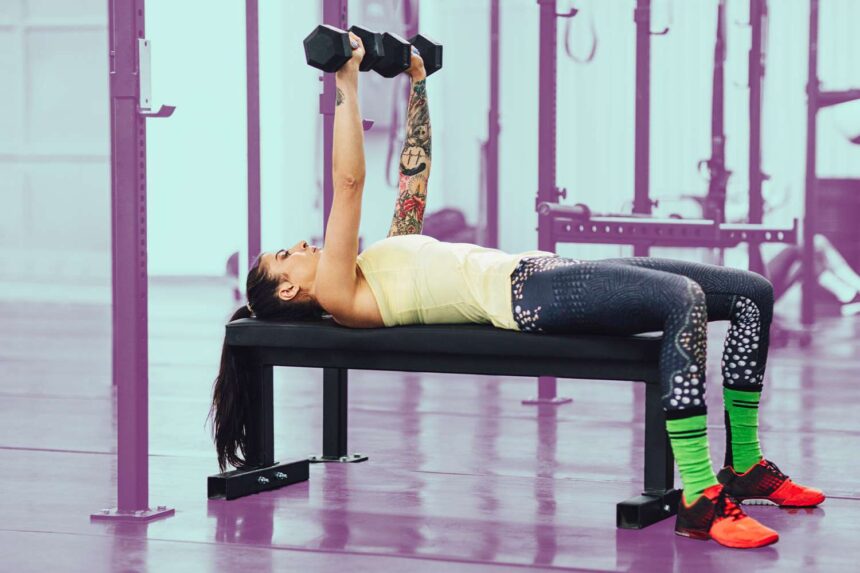
Dumbbell Bench Press stands as the foundation of any chest workout program. This classic movement allows you to lift heavy weight safely while working your entire chest region. To perform it properly, lie flat on a bench with a dumbbell in each hand. Position the weights at chest level with your palms facing forward. Press the dumbbells upward until your arms are fully extended, then lower them back down with control. Keep your shoulders back and your feet firmly planted on the ground throughout the movement.
Incline Dumbbell Press targets your upper chest more specifically. Set your bench to about 30 to 45 degrees and follow the same pressing motion as the flat bench press. This angle shift makes a significant difference in which muscle fibers you activate. Many people notice that consistent incline work helps create a fuller, more balanced chest appearance.
The Dumbbell Fly offers a different type of chest stimulation. Starting from the top position with arms extended, lower the dumbbells out to your sides in a wide arc while keeping a slight bend in your elbows. You should feel a deep stretch across your chest at the bottom of the movement. Bring the weights back together at the top, focusing on squeezing your chest muscles. This exercise emphasizes the stretch and contraction of your chest fibers in a way that pressing movements cannot match.
Decline Dumbbell Press works the lower portion of your chest. By setting your bench to a decline angle (usually 15 to 30 degrees), you shift the emphasis downward. This exercise helps create definition between your chest and abdominal muscles. The movement pattern remains similar to the flat bench press, but the angle change makes all the difference.
Single-Arm Dumbbell Press challenges your stability and core strength. Performing the press with one arm at a time forces your core to work harder to keep your body stable. This variation also allows you to focus intensely on one side at a time, which can help identify and correct any strength imbalances between your left and right sides.
The Dumbbell Pullover exercise creates a unique stretch across your entire chest and engages your back muscles too. Understanding dumbbell pullover muscles worked helps you appreciate this exercise more. Lie across a bench so only your upper back is supported. Hold one dumbbell with both hands above your chest. Lower the weight back over your head in an arc until you feel a stretch, then pull it back to the starting position. This movement works your chest, lats, and serratus muscles simultaneously.
Close-Grip Dumbbell Press shifts more emphasis to your inner chest and triceps. By keeping the dumbbells closer together throughout the movement, you change the muscle activation pattern. This variation adds variety to your routine and ensures complete chest development from all angles.
Creating Effective Dumbbell Chest Workouts at Home
Building a home workout routine with dumbbells requires smart planning and consistent effort. You do not need fancy equipment to see results, just dedication and the right approach. A basic setup includes a pair of adjustable dumbbells and a sturdy bench that can adjust to different angles. If you do not have a bench, you can even perform many exercises on the floor or using stability balls.
For beginners, starting with two to three chest exercises per workout session works well. You might choose dumbbell bench press, incline press, and dumbbell flys. Perform three sets of eight to twelve repetitions for each exercise. Rest for about sixty to ninety seconds between sets. This approach builds a solid foundation while allowing your body to adapt to the new stress.
Intermediate exercisers can increase volume and intensity by adding more exercises or sets. A typical intermediate routine might include four to five different chest exercises with varying angles. You could structure your workout as dumbbell bench press for four sets, incline dumbbell press for three sets, decline press for three sets, and dumbbell flys for three sets. Adjust the weight so the last few repetitions of each set feel challenging but manageable.
Advanced trainees often benefit from techniques like drop sets, supersets, or adding pause reps. These methods increase the intensity without necessarily requiring heavier weights. For example, you might perform dumbbell press to failure, then immediately reduce the weight and continue for more repetitions. Such advanced techniques should only be used after you have built a strong foundation of proper form and strength.
Consistency matters more than perfection when working out at home. Training your chest two to three times per week allows adequate recovery while providing enough stimulus for growth. Make sure to balance your chest training with exercises for other muscle groups to maintain overall body symmetry. Just as maintaining good health requires attention to various aspects of wellness, as discussed in articles like how is gloria copeland health, your fitness routine benefits from a well-rounded approach.
Common Mistakes That Limit Your Progress
Many people unknowingly sabotage their results by making preventable errors. One of the most common mistakes is using too much weight too soon. When you cannot control the dumbbells properly, you compromise your form and increase injury risk. Your ego might want to lift heavy, but your muscles grow better with weights you can control through a full range of motion.
Another frequent error is moving too quickly through repetitions. Quality always beats quantity in strength training. Taking two to three seconds to lower the weight and one to two seconds to press it up ensures your muscles work throughout the entire movement. This controlled tempo maximizes muscle fiber recruitment and leads to better results.
Neglecting proper breathing technique affects both performance and safety. Breathe in as you lower the weights and breathe out as you push them up. Holding your breath creates unnecessary internal pressure and can cause dizziness or even fainting during heavy sets. Proper breathing keeps oxygen flowing to your muscles and maintains stable blood pressure.
Ignoring shoulder positioning is another critical mistake. Your shoulders should stay back and down throughout chest exercises. Letting them roll forward places excessive stress on your shoulder joints and reduces chest muscle activation. Before each set, consciously pull your shoulder blades together and maintain that position while exercising.
Skipping warm-up sets significantly increases injury risk. Your muscles, tendons, and joints need preparation before handling heavy loads. Start with lighter weights for ten to fifteen repetitions to increase blood flow and practice your movement patterns. This investment of just a few extra minutes protects you from potential setbacks.
Tips for Maximizing Your Chest Development Results
Progressive overload stands as the single most important principle for building muscle. Your body adapts to the stress you place on it, so you must gradually increase that stress over time. This does not always mean adding more weight. You can also progress by doing more repetitions, adding more sets, or decreasing rest time between sets. Track your workouts in a notebook or app to ensure you consistently challenge yourself.
Mind-muscle connection dramatically improves exercise effectiveness. Instead of just moving weights from point A to point B, focus on feeling your chest muscles contract and stretch with each repetition. This mental focus helps ensure the right muscles do the work rather than relying on momentum or other muscle groups.
Nutrition supports all your training efforts. Your muscles need adequate protein to repair and grow stronger after workouts. Aim for protein-rich foods throughout the day, including sources like chicken, fish, eggs, beans, and dairy products. Carbohydrates provide energy for your workouts, while healthy fats support hormone production and overall health.
Recovery deserves as much attention as training itself. Your muscles actually grow during rest periods, not during workouts. Ensure you get seven to nine hours of quality sleep each night. Stay well hydrated by drinking water throughout the day. Consider taking rest days between chest workouts to allow complete recovery.
Form always takes priority over weight lifted. Perfect technique with lighter weights produces better results than poor form with heavy weights. If you feel unsure about your technique, consider recording yourself or asking an experienced friend to watch your form. Many online resources also provide detailed demonstrations of proper exercise technique.
Frequently Asked Questions About Chest Dumbbell Exercises
How often should I train my chest with dumbbells?
Training your chest two to three times per week provides optimal results for most people. This frequency allows enough stimulus for muscle growth while providing adequate recovery time between sessions. If you train chest three times weekly, vary the intensity and volume between workouts to prevent overtraining.
Can I build a big chest using only dumbbells at home?
Absolutely yes. Dumbbells provide all the resistance you need for significant chest development. Many successful bodybuilders and fitness enthusiasts have built impressive chests primarily using dumbbells. The key lies in progressive overload, proper form, and consistent training over time rather than the specific equipment used.
What weight dumbbells should beginners start with for chest exercises?
Beginners typically start with dumbbells weighing between five to fifteen pounds for women and fifteen to twenty-five pounds for men. However, the right weight varies based on your current strength level. Choose weights that allow you to complete eight to twelve repetitions with good form while making the last few repetitions feel challenging.
How long does it take to see results from dumbbell chest workouts?
Most people begin noticing strength improvements within two to four weeks of consistent training. Visual changes in muscle size typically become noticeable after six to eight weeks. Remember that muscle building is a gradual process, and patience combined with consistency yields the best long-term results.
Should I do chest exercises every day?
No, your chest muscles need rest days to recover and grow. Training the same muscle group daily leads to overtraining, which can actually decrease your results and increase injury risk. Allow at least forty-eight hours between chest training sessions.
What is the best time of day to perform chest dumbbell exercises?
The best time depends on your personal schedule and energy levels. Some people feel strongest in the morning, while others perform better in the afternoon or evening. Consistency matters more than the specific time. Choose a time when you can train regularly without interruptions.
Build Your Best Chest Starting Today
Developing a strong, well-defined chest using dumbbells is entirely achievable with the right approach and dedication. These versatile tools offer everything you need to target your chest muscles from multiple angles and stimulate growth effectively. Whether you work out at home or in a gym, the principles remain the same: focus on proper form, progressively challenge yourself, and stay consistent with your training.
Remember that building muscle takes time and patience. You will not see dramatic changes overnight, but with each workout, you are making progress toward your goals. Stay committed to the process, pay attention to your body, and adjust your approach as needed. Your dedication will pay off with increased strength, better posture, and the confident appearance you desire.
Ready to transform your chest and overall fitness? Visit HealthGuiders.com for more expert workout guides, nutrition advice, and wellness tips that help you achieve your health goals faster. Start your journey to a stronger, healthier you today.
Disclaimer: This article is for informational purposes only and does not constitute medical advice. Always consult a qualified healthcare professional before starting, stopping, or changing any medication, supplement, or treatment. If you have any pre-existing medical conditions or injuries, speak with your doctor before beginning a new exercise program.